40 years of rants and wonder
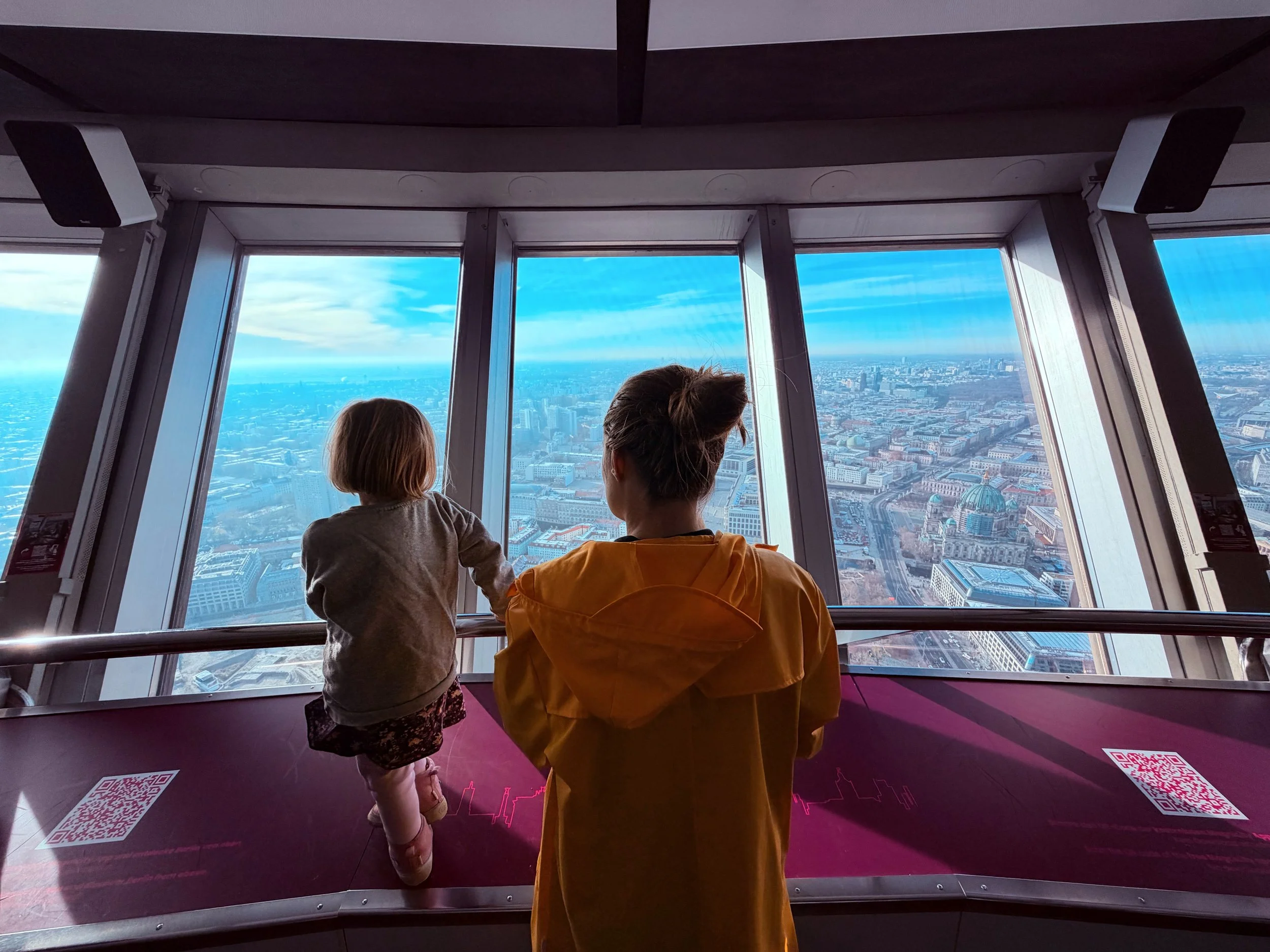
It’s my 40th birthday today and I’d like to take this opportunity to share twelve things that I’ve started wondering about in my early childhood or as a young adult and actually still wonder (or feel angry) about them today. The'y’re in no particular order. What they have in common is that I’ve been thinking about them irregularly for the past forty years.
I never understood as a child how it’s possible for someone to take ownership of nature (cut down trees to make furniture) if that has negative consequences for society (increased CO₂, worse air). Now I know it’s called privatised profits and socialised, externalised costs and we still accept it as if it wasn’t a crime.
It never made sense to me that we use drinking water to flush our toilets while people elsewhere on this planet don’t have enough to meet their basic drinking needs.
Now, with increasing concerns about access to drinking water, I still wonder why we’re not slowly redesigning our plumbing systems to reuse grey- and rain water for flushing toilets. Is it just because the thought is too radical or the systems change would be too expensive?
As a child, I always considered bought things better than homemade. The older I got, the more I became curious about the mechanisms behind that belief, because it’s anything but true. What I took to be my personal preference was actually the result of a system that teaches you to associate value with production, branding, and packaging rather than with substance or effort. What makes that especially effective is how invisible it is. It’s not like someone explicitly tells you “homemade is worse”– it’s implied through ads, packaging, and even how people talk about convenience and quality. And it’s freaking everywhere. We’re drowning in capitalist messaging! Then, over time, you start to internalise those cues without questioning them. It’s very much in line with what people like Edward Bernays were doing: not selling products directly, but shaping the environment so that certain choices feel obvious. Now I wonder how we can do the same – reverse engineer it – and make sustainability, resilience, and circularity the default.
On that note, why does our society glorify completely useless products that are built on extraction and don’t actually add much value to anyone – like, really? I mean, why is Philippe Starck’s Juicy Salif considered such an aspirational, worthy classic but no one is hyping something as genius as a menstrual cup that’s changing millions of lives every single day. I don’t get it. Please explain.
When I left university after studying interior architecture, I felt like I couldn’t contribute to the built environment because I didn’t have enough life experience. The older I get, the more I realise that the world is designed by people who consider their own experience and perspective so relevant that they don’t step into the shoes of others. I’ve come to realize, those who design our world are mostly able men. Not always of course, but enough to notice our world is mostly designed for them and ignoring other people’s lived realities. At this point I think it should be normal for architects to spend time in a wheelchair, navigating the world with a white cane, or moving through the city with a small child on a bicycle. I bet our streets would look very different if this were standard.
Which brings me to the next rant: I took my driving exam in 2004, and while we learned about cyclists, at that time in Vienna they were more theoretical than real. When I started cycling in 2011 while living in the Netherlands – and saw people cycling without proper lights or helmets – I gained a completely new perspective on my time in driving school. Ever since then, I’ve been wondering why it’s (still) not mandatory for everyone taking a driving exam to complete a two-hour session on a bike in the city.
Neither from an economic perspective nor from a social perspective does the 40-hour workweek make sense to me; with functioning childcare, a family has roughly 60 work hours available. If one partner works 40, there’s about 20 left for the other. I think as a society we should aspire to a 30-hour workweek. Given that productivity and satisfaction drop after that many hours anyway, it makes no sense to me why we should force 40 hours onto people. The 40-hour norm wasn’t designed for modern work – it came out of industrial-era, where time on-site was the easiest way to measure output. That assumption doesn’t hold for most knowledge work, where the last hours often add little value and can even reduce overall performance. If output is what matters, not time, then a shorter standard aligns better with both productivity and quality of life.
With so much technological progress, I still don’t understand why countries tax labour instead of implementing a system that encourages it. The most profitable companies can maximise profits without depending on human labour, while care and education can only thrive with, from, and because of it. I want everyone to live a good life. I don’t want a few billionaires to live lives built on extraction.
Which brings me to: Why are we okay with supermarkets “oligarching” our food supply systems? If I were to name one evil that’s central to many of our global struggles, it would be supermarkets. Ever thought about that? Not really, probably, but it really is an enemy hidden in plain sight. The built-in environmental pressures start with fully stocked shelves of food that might never get eaten, extend to the demand for perfectly shaped, glossy vegetables available all year round – completely ignoring regional seasons – and reach all the way to the power supermarkets have to drive down farmers’ prices by monopolising access to customers. And then, just by the way, making the supermarket owning families amongst the richest people.
In 2018, I accidentally became the interim Head of Marketing at Veganz. Even though I remember never liking eating animals as a child, I somehow normalised it over time. After my time at Veganz, I felt exposed to different questions, because the question of whether it’s morally acceptable to eat animals never quite did it for me. There are a few realisations that have made it extremely easy for me to stay away from animal products, given that I live in a city in Europe. In our capitalist system, profit will always remain the main deciding factor – and that comes at the expense of animal wellbeing. Second, because of industrialised agriculture, even the most organic cow will likely be put on a truck, transported to a slaughterhouse, and killed there. I don’t think it’s okay for animals to travel like that. Third, cows only give milk because they are mothers, not simply because they are cows. I feel very emotional about this one because once you’ve breastfed your own baby and know how painful yet beautiful that can be – and once you’ve seen a cow cry when her calf is taken away so that we can drink her milk instead –there’s no way back. I’m okay abstaining from dairy, even though I always said I could never go vegan because I loved cheese so much. Thanks, but no thanks.
In 2019, I visited Palestine. I didn’t know much about it and kind of took the little information I had at face value. It was a strange experience; however, I didn’t question it too much. While I left with the realisation that Palestine was an open-air prison, I still couldn’t quite piece together the anger I should have been feeling at the time because the narratives I was fed in school were nothing more than narratives designed by someone with an agenda. It’s called his-story for a reason. I think about that a lot.
Living by the believe that we need to find our voice, shout it from the rooftops and keep doing so until the people that are looking for us, find us, here’s a quick note that I’m currently available for new projects or interesting work opportunities, ideally in spaces one or more of these thoughts fit in.